
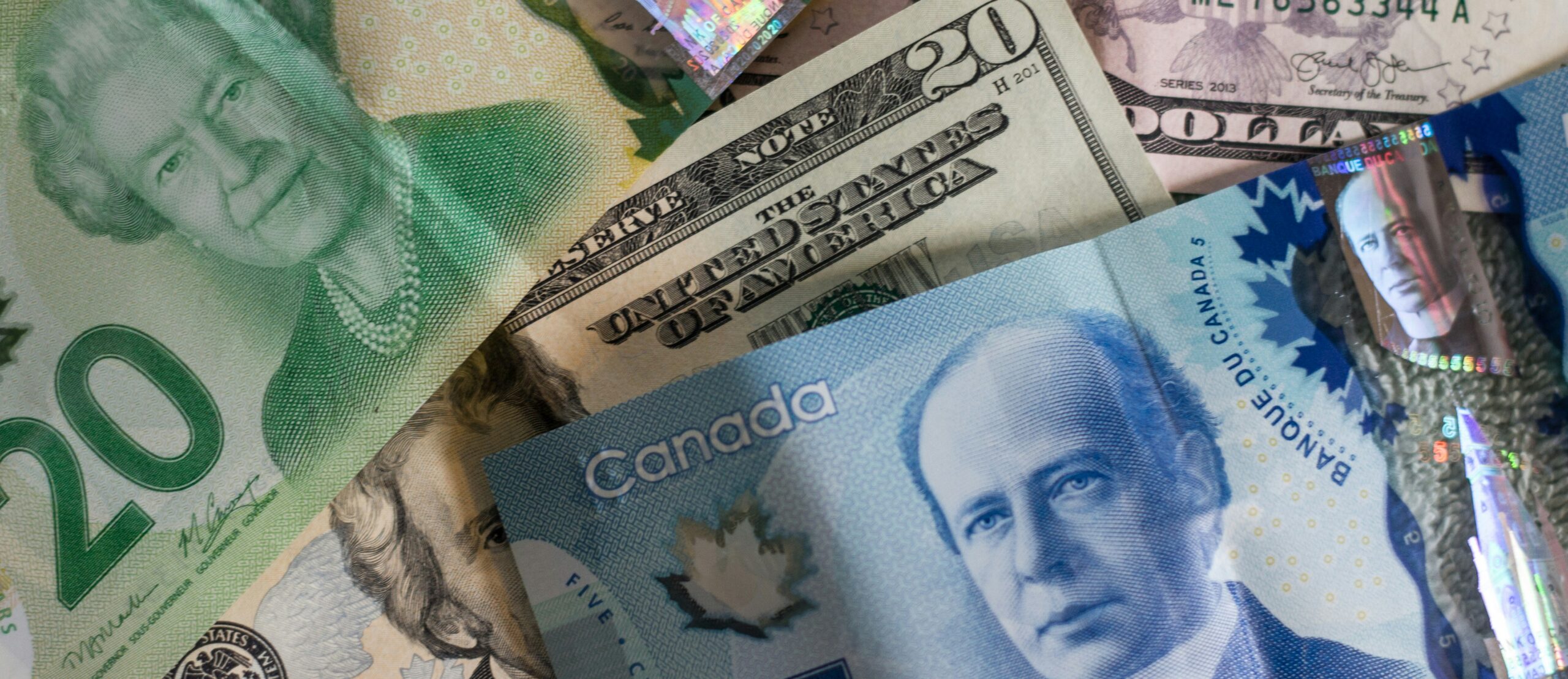
Canadian Dollar extends gains
- Trump waives sanctions on Russia oil
- Treasury yields consolidating losses
- US dollar continues to trade defensively
USDCAD open (6:00 am): 1.4096, overnight range 1.4088-1.4135, close 1.4141, WTI $98.37, Gold $4,167.63.
The Canadian dollar is adding to last week’s gains which came courtesy of a broad US dollar sell-off once markets slashed the odds of an October Fed rate hike. A rout in semiconductor and tech stocks, along with falling US Treasury yields, added fuel to the greenback’s retreat.
Albertans head to the polls today in what amounts to a referendum on whether to hold a referendum on staying in Canada.
WTI gapped down overnight, tumbling from $101.86 on Friday to a $96.74 low today before creeping higher into the New York open. The selling followed President Trump’s executive order waiving Graham Act sanctions and tariffs on Russian energy, which opened the door to more Russian crude reaching the market.
Don't Waste Money With Banks.
Get Exchange Rates Up to 2% Better With KnightsbridgeFX
In Asia, Monday’s session ended with stocks unchanged to a touch firmer. The ASX 200 tacked on 0.44% to finish at 8,845.70, the Topix didn’t budge, and Hong Kong markets were shut for the Chung Yeung Festival.
As of 7:25 am, European bourses are down with the CAC-40 leading the slide at minus 1.47%, the DAX off 1.27% and the FTSE 100 down 1.08%. S&P 500 futures are pointing 0.47% higher. The US 10-year Treasury yield stands at 5.077%,and the DXY is 101.81.
USDJPY was jumpy but contained in a 157.70-158.22 range. Bank of Japan Governor Kazuo Ueda told markets underlying inflation is now within shouting distance of 2% and argued that hiking at the right pace would stop bond yields from running away.
AUDUSD ground higher through the night in a 0.6953-0.6981 range, with blowout China GDP numbers and a still-sagging greenback doing the heavy lifting. RBA Assistant Governor Kent poured some hawkish fuel on the fire, noting that the neutral rate seems to be moving up, which raises the question of whether policy is actually restrictive enough.
Economists see Canada’s September headline inflation climbing to 3.2% from 3.0% in August, with pricier oil doing most of the damage.
The Bank of Canada’s Business Outlook Survey also lands today.

 AUD
 CAD
 EUR
 GBP
 NZD
 USD

