
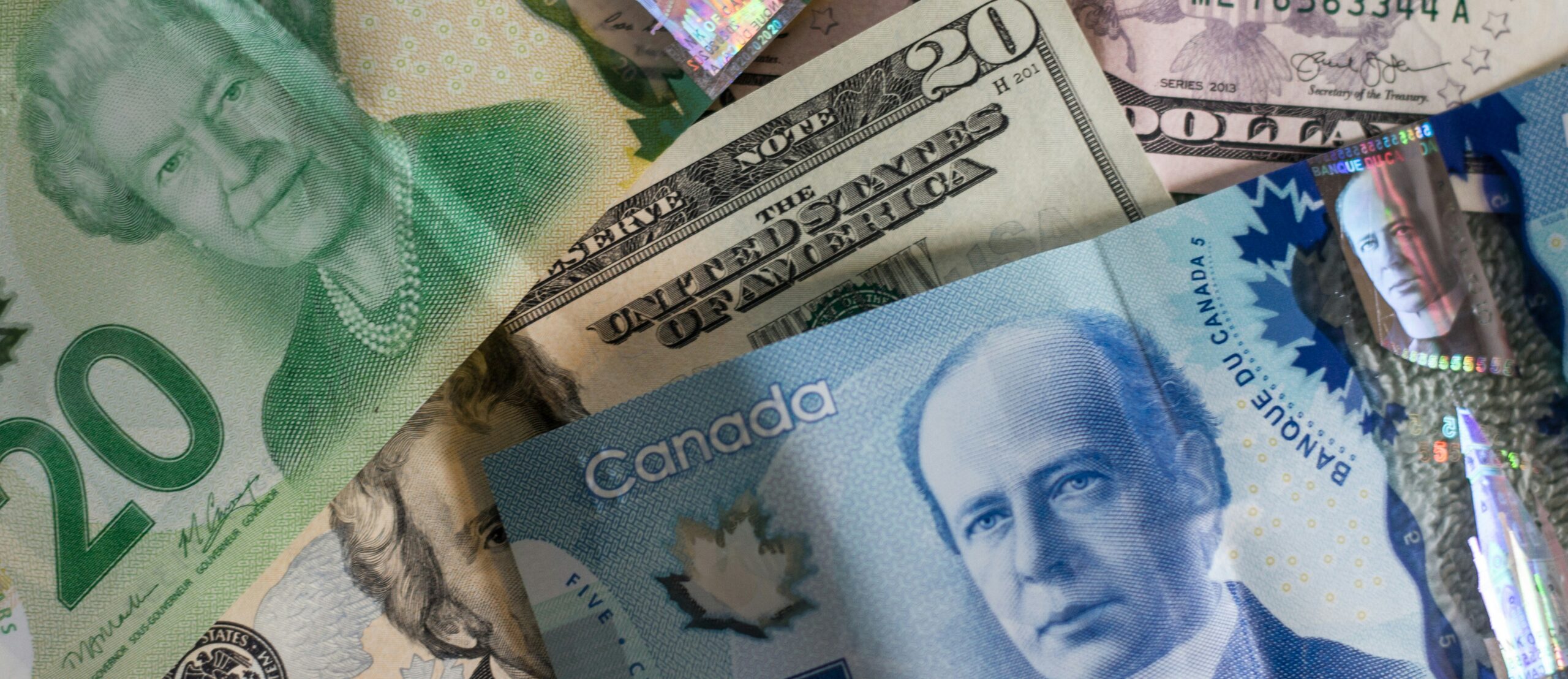
Canadian Dollar still sliding
- Widening CAD/US interest rate spreads weighing on Loonie
- Tech stock weakness sparks safe-haven demand for US dollars
- US dollar continues to grind higher
Cours d'ouverture USDCAD : 1.4181, fourchette de fluctuation nocturne : 1.4151-1.4189. fermer 1.4162, WTI 73.52, Or 4,124.89
The Canadian dollar drifted with a negative undertone overnight.
Yesterday’s inflation print ran hotter than forecast but the details were weak. There is nothing in the report to push the BoC toward a hike.
WTI slid from Monday’s 77.14 peak to 73.69 this morning as tankers resume transit through the Strait of Hormuz.
Ne gaspillez pas d’argent avec les banques.
Obtenez des taux de change jusqu'à 2 % meilleurs avec KnightsbridgeFX
BoC Governor Tiff Macklem speaks on the global financial system in Quebec at 9:40 am, with a press conference to follow near 10:50 am.
FX desks came in this morning far less concerned about Iran and the US and turned their attention turned to regional data, the soap opera of UK politics, and the guessing game over when the long-telegraphed US-Japan FX intervention finally lands.
Conviction is hardening that Warsh will not bend to Trump’s demand for cheaper money any time soon. When the Chair called the Fed “unambiguously and unanimously” committed to a 2.0% inflation goal, the market heard a man signalling higher rates, not lower. Chicago’s Austan Goolsbee agreed yesterday, noting the central bank has been wrestling with inflation that sits well above target and had been heading the wrong way.
That conviction has powered the greenback for a week now. The dollar index has tacked on 1.97% over the past month and 3.34% across the past six.
Asian equities buckled on a wave of tech nerves. Japan’s Topix slumped 2.56% and Hong Kong’s Hang Seng shed 1.82%, while Australia’s ASX 200 eased 0.33%.
By 7:15am, European markets were broadly lower, paced by a 1.11% slide in Germany’s DAX. France’s CAC 40 gave up 0.65% and Britain’s FTSE 100 dropped 0.45%. S&P 500 futures were down 1.36%, the 10-year Treasury yield was 4.507%, and the DXY is 101.21.
EURUSD traded in a 1.1405-1.1439 range and came under pressure after ECB President Christine Lagarde played down the odds of a further hike, saying there is no sign yet of inflation expectations de-anchoring or of second-round effects that would justify a more forceful response at this point. Goolsbee’s remarks only deepened the bid for dollars. The euro got no help from a Eurozone composite PMI that crept up to 49.5 from 48.5 in June, still mired in contraction.
GBPUSD drifted in a 1.3213-1.3257 band with a downward lean, weighed by the hawkish US rate story. Former Manchester mayor Andy Burnham has already been crowned the next British prime minister destined to be sacked mid-term, even though nominations do not formally open until July 1. That political churn looks set to cap sterling near term. Adding to the drag, UK Services PMI sank to 48.7 from 49.3 in June, the sharpest pace of contraction in three years.
USDJPY changed hands in a 161.28-161.74 range, with traders shrugging at intervention risk even after Finance Minister Katayama revealed she had spoken with US Treasury Secretary Scott Bessent, a thinly veiled hint at coordinated FX action.
AUDUSD slipped in a 0.6942-0.7007 range, dragged down by a firm greenback as safe-haven flows built on the back of a global tech selloff and softer commodity prices. A slightly better than expected read on Australian PMI barely registered.
 AUD
AUD CAD
CAD EUR
EUR GBP
GBP NZD
NZD USD
USD
