
The short answer
No. In Canada, you only need a branch for foreign banknotes in hand, a paper bank draft, or in-person identification. Everything else moves bank account to bank account. A Knightsbridge Foreign Exchange Inc. client registers online once, sends Canadian dollars from their online banking, and receives the other currency in the account they name, as of 29 September 2026.
Key takeaways
- You do not need to visit a branch to exchange currency in Canada unless you want banknotes in your hand, and even then you can exchange before you get there.
- Only three things still need a counter: physical foreign cash, a paper bank draft, and in-person identification at a small number of institutions.
- Everything else is done from your own online banking: converting money in an account, wiring it abroad, paying a supplier or a school, bringing property proceeds home.
- Even at a branch, the exchange itself happens at a trading desk the teller sends your request to. Nothing physical moves.
- KnightsbridgeFX has no counter and no walk-in branches. You can reach one main trading desk by phone, through an online booking portal, via chat support on the website, or by calling local numbers in seven cities; you can also mail sign-up documents to our appointment-only head office, where our corporate staff works.
- Get the rate on your exact amount before you commit, and compare it with your bank’s for the same amount on the same day.
The part most banks do not mention
You can use a company like KnightsbridgeFX to convert Canadian dollars into US dollars and have them delivered to your own US dollar account at your bank. If you need physical cash after that, you walk into your branch and withdraw the US dollars you already bought from us. You still get the cash you need, and you get our exchange rate rather than the counter rate. The branch becomes a cash machine, not the place where the exchange happens.
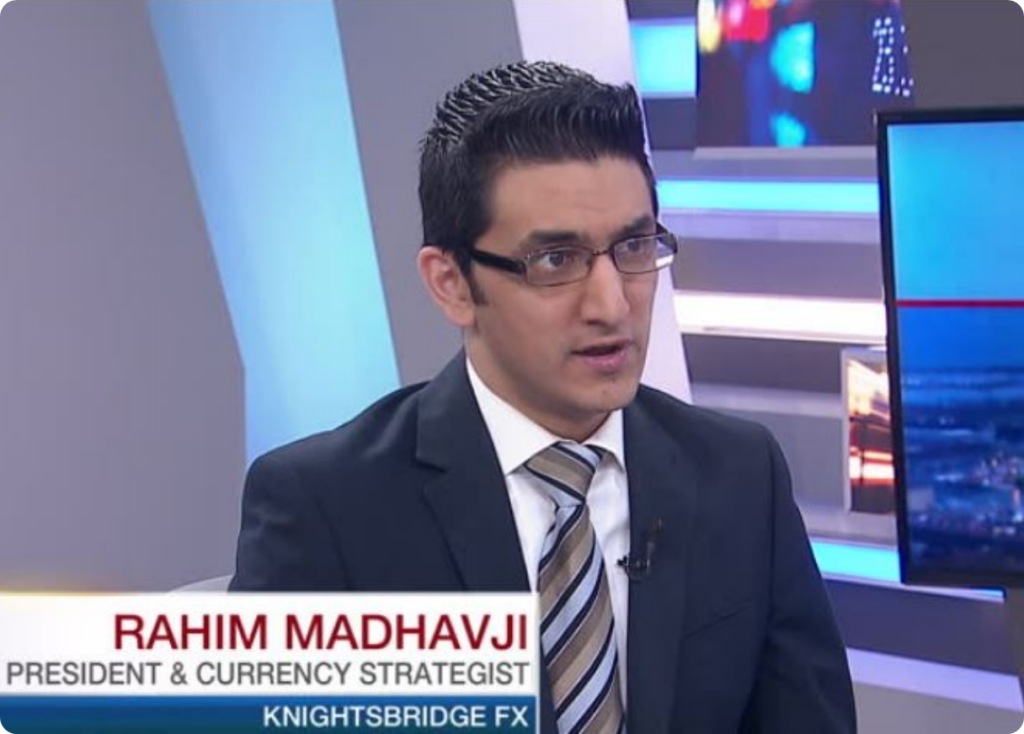
I am Rahim Madhavji. I founded Knightsbridge Foreign Exchange Inc. in Toronto in 2009. I still run it and handle daily operations, and I manage a large team, so what follows is the President’s answer, not a marketing department’s. I have been asked this question more times than I could count, every year, since before there was a Knightsbridge to ask it about. So let me answer it the way I would if you phoned the desk and happened to get me.
I run a currency exchange company, so I am interested in how you convert your money. The rates and timings below are dated and sourced so you can check them yourself.
Every October we hear from people preparing to spend the winter down south. They usually find us online and ask the same question: “Where is your nearest office?” When I explain that we do not have a retail counter, there is often a brief pause, followed by, “So how do I send you the money?” That reaction is exactly why I wrote this article. Many Canadians still exchange currency at their bank branch, not because it is cheaper or safer, but because it is familiar. They assume it is the only option because no one has explained how the alternatives work. Business owners who exchange currency regularly do not have time to visit an office. They prefer a bank-to-bank solution that saves time and lets them compare rates before they book.
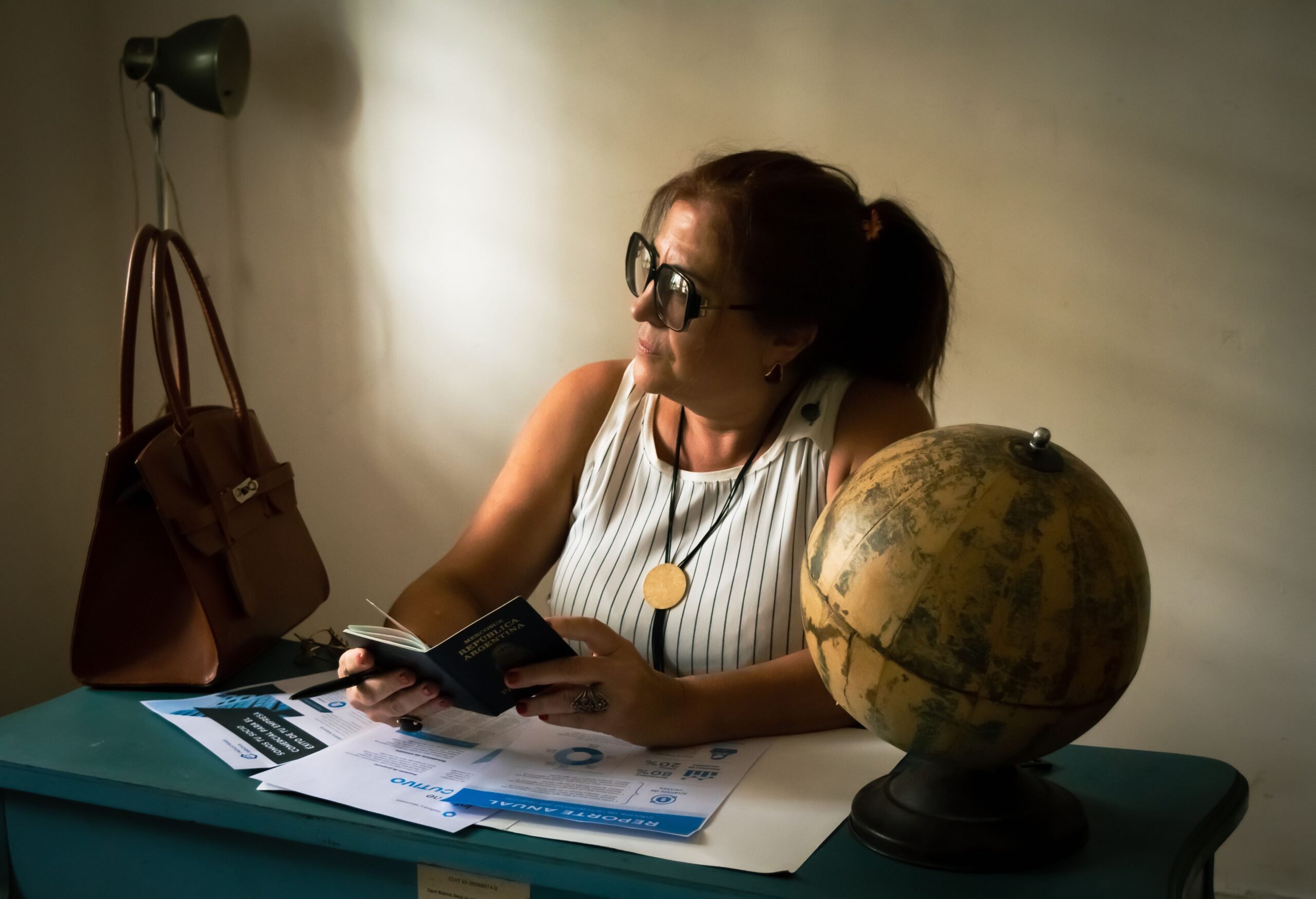
Why do so many people think they have to go somewhere?
I get it. If I had not been working in this industry since 2009, I would ask the same question. For most of their lives, Canadians exchanged currency by walking into a bank branch or exchange office and dealing with someone behind a counter. You asked for a rate, signed a form, and either left with an envelope of cash or waited a few days for the funds to arrive. That process was fine. It was simply the way currency exchange worked before better technology was available.
Three things keep that habit alive today. First, people still associate currency exchange with cash, even when what they need is money deposited into a US bank account. Second, trust. A building with a logo on the front feels more familiar and accountable than a website, which is why I wrote a separate article on how to check that a currency exchange company is legitimate. Third, banks have never had much reason to challenge the idea that money should be exchanged in a branch. A customer who walks in often accepts the rate being offered. As a result, many people still spend extra time and often accept a less competitive rate for a transaction that can now be completed securely from home in a few minutes.
Don't Waste Money With Banks.
Get Exchange Rates Up to 2% Better With KnightsbridgeFX
What actually happens when you exchange currency?
Let me break it down. At its core, a currency exchange converts money from one currency to another at an agreed rate. When the funds stay within the banking system, no cash changes hands. You are not moving physical dollars from one place to another. You are converting a Canadian dollar balance into a US dollar balance, and you can do that from almost anywhere.
That is the part many people never hear. If you exchange $10,000 CAD for US dollars and have the funds deposited into a bank account, no one counts bills, packs cash, or moves money in a vault. The transaction takes place electronically. One balance decreases, another increases, and the provider earns its margin through the exchange rate it offers.
Even when you visit a bank branch, the teller usually is not the person performing the exchange. They enter your request into the bank’s system, which routes it to the teams and systems that handle foreign exchange. In other words, the exchange happens behind the scenes whether you request it in person, over the phone, or online.
Once you understand that, the question becomes less about where you need to go and more about who is handling the transaction. You are no longer choosing between a branch and a website. You are deciding who will perform the exchange, what rate they will offer, and how much they will charge for the service.
What still needs a branch, and what never did?
Three things still need one, and I would rather be honest about them than pretend the branch is useless.
Physical banknotes need a counter, and most branches keep only the most common currencies on hand and order the rest in, which is why a cash order often means two visits. TD publishes a pick-up window of three to seven business days for a foreign cash order placed online, and RBC says typically three, both as published on 29 September 2026. A bank draft needs a counter, because a draft is a piece of paper. And a small number of account openings at some institutions still require someone to look at your identification in person.
Cash itself is a shrinking part of how Canadians pay. The Bank of Canada’s Methods-of-Payment survey puts cash at about 18% of in-person purchases by volume in 2025, as published on the Bank’s survey page on 29 September 2026. The point is not that cash is gone. It is that for most of what people exchange money for, cash was never involved in the first place. If you are weighing up where to exchange American and Canadian money, start by asking whether you need notes at all.
Everything else never did. Converting money that stays in the banking system, sending it to an account in another country, paying a US supplier, moving the proceeds of a property sale home, paying tuition. None of those has needed a branch for years, at your bank or anywhere else.
Still not sure which side you are on? Three questions.
1. Do you need foreign banknotes in your hand?
Yes: that part still needs a counter. Buy the US dollars first and withdraw them from your own US dollar account, or take a modest amount from your bank for the journey and move everything above it electronically. No: keep reading. You do not need a branch, and you may never have needed one.
2. Does the money need to end up in a bank account, yours or someone else’s?
Yes: then it is an electronic transfer from the first step to the last, whoever you use. No building is involved at any point, including at your bank. No, it has to be a paper draft: that is a counter, and it is the one other thing a branch is still for.
3. Has your bank ever shown you the rate before you were standing at the counter?
For most people, the honest answer is no. That is the part worth fixing, and it takes one phone call or one login. Get the rate on your exact amount before you commit, from us or from anyone, and compare it with your bank’s for the same amount on the same day.
Here is the split as it stands today.
| What you need to do | Needs a branch? | Status on 29 September 2026 |
|---|---|---|
| Convert CAD to USD, GBP, EUR, AUD or NZD in an account | No | Online or by phone. No visit to KnightsbridgeFX; most banks require none either. |
| Send the converted money to an account abroad | No | Outgoing wire. Free at KnightsbridgeFX above the $2,000 minimum. The receiving bank may charge its own fee. |
| Bring foreign currency home to a Canadian account | No | Wire the foreign currency in, receive Canadian dollars in your own account. |
| Pay a US supplier or a foreign tuition invoice | No | Converted funds go straight to the payee’s account. |
| Get a quote before you commit | No | Phone, email, chat, or the online account. The rate includes the markup. |
| Foreign banknotes in your hand | Yes | Bank or bureau counter. KnightsbridgeFX does not handle cash. You can buy the currency from us first and withdraw it from your own foreign currency account. |
| A bank draft in a foreign currency | Yes | Bank counter. KnightsbridgeFX does not issue or accept drafts. |
And here is the same thing from the other direction, a branch visit against an online exchange, feature by feature.
| Feature | Online exchange | Branch exchange |
|---|---|---|
| Visit required | No | Yes, sometimes more than one |
| When you see the rate | Before you commit, on your exact amount | Usually at the counter |
| Hours | KnightsbridgeFX desk: Monday to Thursday 8:30 a.m. to 9:30 p.m. Eastern, Friday and Saturday 8:30 a.m. to 5:30 p.m., as published 29 September 2026 | Branch hours |
| Physical cash | No | Yes, often ordered in |
| Bank draft | No | Yes |
| Account-to-account transfer | Yes | Yes |
| Tuition, supplier and property payments | Yes | Yes |
| Written confirmation with a traceable number | Yes, by email | Yes, on paper |
Our head office is appointment-only, and a transaction has never required a visit. The nearest branch to any client we have is the phone already in their hand.
Rahim Madhavji, President, Knightsbridge Foreign Exchange Inc.
What does a season look like for a couple who stopped driving in?
Let me describe a pattern we see every autumn. The details below are changed and combined from many clients, and no individual is described, but the shape of it will be familiar to anyone who winters in the south.
A retired couple in the Okanagan spend five months a year in Arizona. For years their October routine went like this. Drive into town, take a number at the branch, and ask for US dollars. The teller quotes a rate at the counter, which is the first time they see it. They want some cash for the drive, so the branch orders it in, which means a second trip a few days later. The larger amount, the money that pays the Arizona property bills for the winter, goes by wire to their US account, which is a third appointment because the branch wants the wire form signed in person. That is no exaggeration: TD’s own currency exchange page, read on 29 September 2026, lists wire transfers as available in branch and tells you to visit your nearest branch to send one. Then, in April, the whole thing runs in reverse to bring the leftover dollars home.
By their own reckoning, that was five or six trips a year, most of an afternoon each, at a rate they only learned when they were already standing at the counter with their coat on. Call it ten hours a year, plus the drive, plus the waiting, and a rate they never compared because nothing convenient existed to compare it against.
The first year with us took them about twenty minutes, at the kitchen table, in the evening. Registration and document upload on our site, which our How it works page puts at around three minutes, and verification, which it puts at usually under one business day. Every October since, the autumn transaction is a phone call to the desk for a quote on the actual amount, a yes, and a bill payment from their own online banking to send us the Canadian dollars. The US dollars go out by wire to the Arizona account, usually the same day the funds are received. April is the same in reverse. They still stop at their branch on the way to the airport for a few hundred dollars of cash for the road, because that is the one thing a branch is still for. If you are in the same position, my article on how snowbirds open and use a US bank account covers the receiving end.
The hours are the point of the story, not the rate. The rate is better too, and I explain exactly how our markup works further down, but I have had this conversation enough times to know what people remember is the afternoons they got back.
How does a transaction work when nobody visits anyone?
In five steps, none of which involve a building. The full version, with the timings we publish, is on our How it works page. Here is the short version, and the question people ask at each step.
1. You register once
Online, with a piece of government identification and a document for identity verification. The question is always, “Why do you need my identification?” The answer is FINTRAC. We are a registered money services business, and we must confirm who you are and that the account the money comes from is yours. If a provider does not ask, walk away.
2. We verify you
Someone on our team reads your documents and approves the account. Our How it works page usually lists this as under one business day as of 29 September 2026, and more than half of new accounts open within minutes. You do not need to be present. You will get an email and a text when it is done. If you need urgent service, you can request a rush application.
3. You get a quote and book
By phone, email, chat, or in your online account, for the exact amount you are exchanging. The rate you are quoted includes our markup, which is as low as 0.1% and averages 0.5% of the amount, depending on size, as of September 2026, with larger amounts at the lower end. Compare that with your bank’s rate for the same amount on the same day. If you book, you get a written trade confirmation with a confirmation number.
4. You send us the Canadian dollars
From your own online banking, by bill payment, Interac e-Transfer, wire, or EFT. You never hand money to a person. This is the step people find hardest to believe and easiest to do.
5. We send the other currency where you tell us
To your own account, to someone else’s, or to a company. Outgoing wires are free above our $2,000 minimum. The receiving bank may charge its own fee, and that fee is theirs, not ours. When sent by wire, our How it works page says delivery can be as quick as the same day. If you want to know what happens after the wire leaves, wire transfer timeframes in Canada explains the steps between banks.
What we do not do is worth saying plainly. We do not take cash, cheques, or bank drafts. We do not offer forward contracts to personal clients. And we do not have a counter, which is not a gap in the service. It is the service.
Don't Waste Money With Banks.
Get Exchange Rates Up to 2% Better With KnightsbridgeFX.
Knightsbridge Foreign Exchange Inc. is registered with FINTRAC as a money services business (registration M09819788) and is regulated by the Autorité des marchés financiers in Quebec.
Does KnightsbridgeFX have a branch near me?
No. We have no walk-in branches anywhere, and no walk-in counter in Toronto either. Instead, we have a trading desk, a toll-free number, and a local phone number in seven cities. The head office at First Canadian Place, 100 King Street West, Suite 5700, Toronto, is appointment-only, and no transaction has ever required a visit. We checked these numbers against our site on 29 September 2026.
| City | Local number |
|---|---|
| Toronto | 416-479-0834 |
| Montreal | 514-613-0393 |
| Calgary | 403-800-3025 |
| Ottawa | 613-704-1798 |
| Vancouver | 604-229-1065 |
| Victoria | 1-877-355-5239 |
| Winnipeg | 204-318-1150 |
| Halifax | 902-800-2063 |
| Anywhere in Canada or the US | 1-877-355-5239 toll-free |
No office visits, and no shortage of ways to reach us
KnightsbridgeFX has served more than 150,000 clients since 2009, without a single counter visit from any of them. Each has a way to reach us: through the online portal, by phone during the hours above, by email at [email protected], or by chat in the online account. On 29 September 2026, those clients rated us 4.9 out of 5 across 168 Trustpilot reviews and 4.8 out of 5 across 628 Google reviews. Read the recent ones, and you will notice how many mention the phone call, the service, and the rate.
If you are used to walking into a bureau in a shopping centre, this will feel strange for about one transaction. After that, where the office is stops mattering, just as you have stopped asking where your bank’s trading desk is.
What do people worry about when there is no building?
Three worries come up, and they deserve straight answers.
“What if I get stuck and need help?”
You will not be dealing with a website alone. If you have a question, you can pick up the phone and speak with someone on our team. We answer questions, walk clients through the process, and help resolve issues when they arise. In practice, most clients find it easier to reach a person here than through a bank branch, where foreign exchange is only one of many services. We also offer live chat on the website, and we respond to emails at [email protected] within an hour during business hours.
“What if my money gets lost?”
That is probably the biggest concern people have, and it is understandable. Your funds do not disappear into a separate system once you send them. Payments move through the Canadian banking system and can be traced. Every transaction has a confirmation number, and banks can track wires and bill payments if they need to investigate a problem. We are happy to explain how our tracking works. We deal with every bank in Canada and have the relationships to help track and locate funds. The most common reason for a delayed payment, which is rare, is that the receiver’s information was entered incorrectly, usually a typo, so it is always worth double-checking your inputs. The bigger risk today is not lost money; it is fraud. That is why you should always verify payment instructions by calling a phone number you found independently, and never rely only on instructions sent by email.
“What if I want to know who I am dealing with?”
You should. Before sending money to any provider, check that they are properly registered, have a real business presence, and have a verifiable track record. In our case, we are registered with FINTRAC, regulated by the AMF in Quebec, and based in First Canadian Place in Toronto. We hold an A+ rating with the Better Business Bureau, which can act as an intermediary in any dispute. If you are still unsure, start with a smaller transaction first. That is what many new clients do. You can see exactly how the process works before moving a larger amount, and nothing in our process requires a leap of faith.
What should you do now?
- Decide whether you need cash. If you do, picking up a few hundred dollars for the road makes sense, or buy the currency first and withdraw it from your own foreign currency account. For larger amounts deposited into an account, you do not need a counter.
- Figure out where the money needs to go. It could be your own US bank account, a property manager, a school, or a supplier. The destination account matters far more than the currency exchange company’s location.
- Ask your bank what rate it would give you today for your actual amount and write it down. Most people never do this because the real rate is not obvious until they ask.
- Get a second quote for the same amount on the same day. Whether that is from KnightsbridgeFX or another provider, the comparison will tell you more than any advertisement. Once you have both numbers in front of you, the decision usually becomes clear.
Skip the drive. Keep the afternoon.
Open a free account from wherever you are reading this, or call the desk at 1-877-355-5239 for a quote on your actual amount. We show you the rate with the markup in plain sight, so you can compare it with your bank’s before you decide anything.
Knightsbridge Foreign Exchange Inc. is registered with FINTRAC as a money services business (registration M09819788) and is regulated by the Autorité des marchés financiers in Quebec.
Read next: How KnightsbridgeFX works, step by step · Is KnightsbridgeFX legit? How to check for yourself · How snowbirds open and use a US bank account
Where do these figures come from?
- FINTRAC money services business registry, search by name or by registration number M09819788, read 29 September 2026.
- Revenu Québec, Money-Services Businesses Register, the public register of Quebec money-services business licences, read 29 September 2026.
- Bank of Canada, Methods-of-Payment Survey, for the share of purchases made in cash, read 29 September 2026.
- TD Canada Trust, Foreign Currency Exchange Services, for the three- to seven-business-day pick-up window on foreign cash orders and the branch visit required to send a wire, read 29 September 2026.
- RBC Royal Bank, Purchase Foreign Cash, for the typical three-business-day pick-up on foreign cash orders, read 29 September 2026.
- Knightsbridge Foreign Exchange, How it works and Contact pages, for the five steps, payment methods, timings and opening hours, read 29 September 2026.
This article describes the KnightsbridgeFX process, timings and opening hours as published on knightsbridgefx.com on 29 September 2026, and the markup as confirmed on that date. Confirm current terms on the How it works page or by calling the desk before you rely on them.
Disclosure: This article is written by the President of Knightsbridge Foreign Exchange Inc. and describes the company’s own process. The seasonal example is a composite drawn from many clients, with details changed, and describes no individual. It is not financial advice. Rates, fees, and timings change, and every figure above carries the date it was checked.
 AUD
AUD CAD
CAD EUR
EUR GBP
GBP NZD
NZD USD
USD
