
The short answer
You can move money from a Canadian bank account to a US bank account without going to a branch. Use your online banking to send Canadian dollars to a currency exchange company by bill payment, Interac e-Transfer, or an account debit. The company converts the money and sends US dollars to your US bank account. Checked on November 10, 2026.
Hi, I am Rahim Madhavji, President of Knightsbridge Foreign Exchange Inc. I founded the company in Toronto in 2009, and since then we have exchanged over $30 billion for more than 150,000 clients. One problem I hear about again and again from Canadians who have moved to the United States, or who spend the winter there, has nothing to do with exchange rates.
You bank with RBC, TD, CIBC, BMO, or Scotiabank in Canada. You have moved to the United States. How do you get your money into your Bank of America or Chase account when you cannot walk into a branch in Canada?
The money is yours, the account is yours, and your bank still asks you to stand in front of a teller in Canada before it will send a wire. If you are in Texas, Arizona, California, or Florida for the winter, that is not possible.
So here is the guide I wish everyone in Canada had before they called their banks. It covers what your bank will let you do remotely, and three ways to move the money without visiting a branch. I run a currency exchange company, so I have an interest in how you convert your money. Our service is one of the options below, and I am upfront about that. The steps and time frames are dated so you can check them yourself.
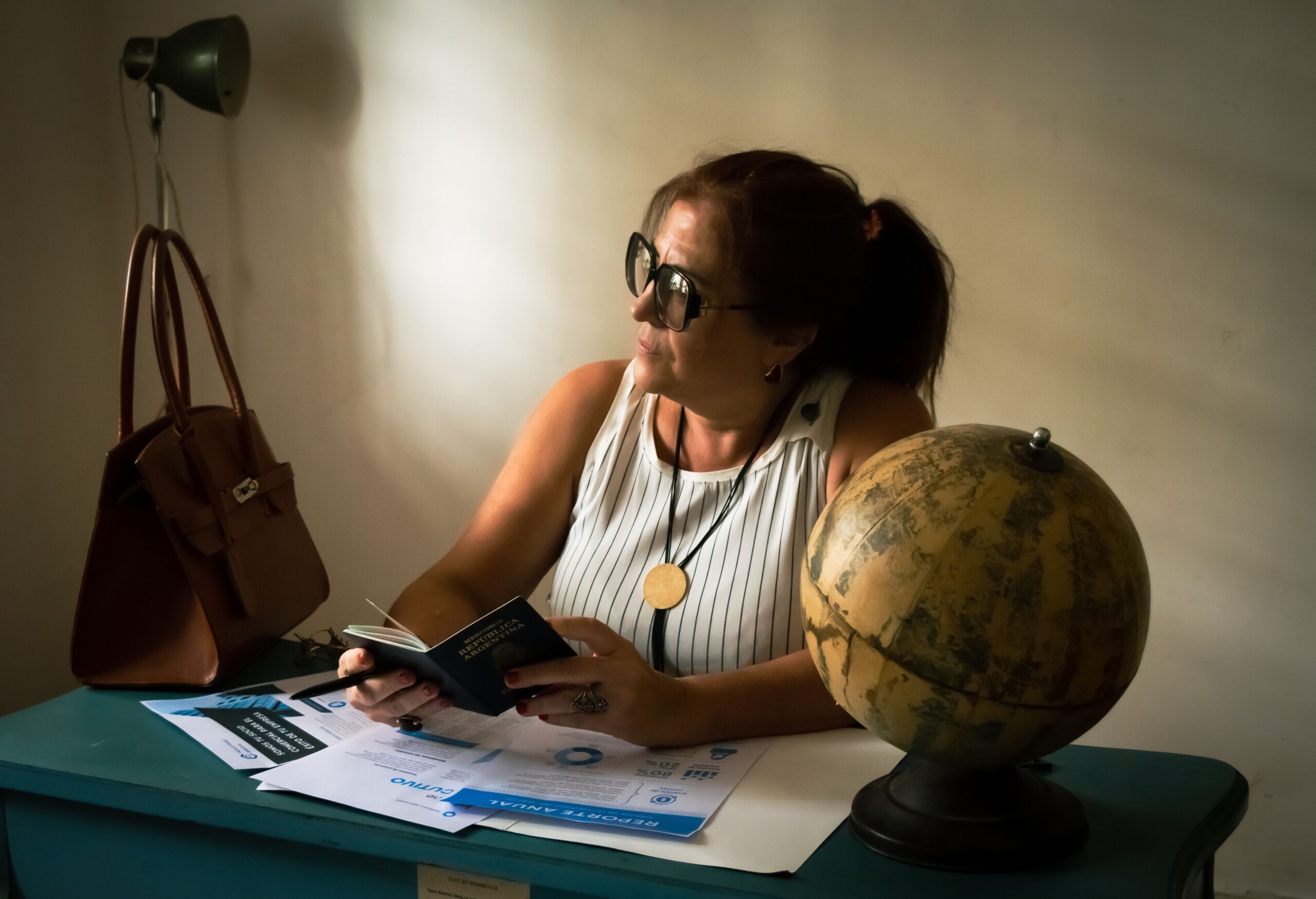
Why does my bank want me in a branch to send a wire?
Your bank wants to be sure it is really you before a large sum leaves your account for another country. A wire cannot be pulled back once it is sent, so many banks ask for an in-person signature.
That rule protects you when you live down the street from the branch. It works against you when you live in another country. The bank is not refusing to give you your money. It is asking you to take a step you cannot take from another country.
Some banks will take a wire request by phone if you send a signed letter first. It is worth one call to your branch manager to ask, and our guide on how a wire transfer from Canada to the USA works lists the details the bank will need. If the answer is no, or the limit is too low, use one of the three routes below.
Don't Waste Money With Banks.
Get Exchange Rates Up to 2% Better With KnightsbridgeFX
What will my own bank let me do from outside Canada?
Every large Canadian bank has an online service for sending money abroad, and each sets a limit. Below that limit, you may not need anyone’s help. Above it, the bank usually sends you to a physical branch. Check the limit on your bank’s own page before you plan anything.
RBC
- Online: RBC Online Banking and the RBC Mobile app have an international money transfer option. Check the limit before you start.
- By phone: call your branch and ask whether it will send the wire over the phone. RBC charges a higher fee for a wire that is not sent in person.
- Branch visit: RBC sends many outgoing wires from the branch and asks you to contact a branch for larger currency conversions.
- Easier route: skip the wire. In RBC online banking, add Knightsbridge Foreign Exchange Inc. as a payee and pay us the same way you pay a bill. The steps are under “Route 1: bill payment” below.
TD
- Online: TD Global Transfer in EasyWeb or the TD app. Check the limit, because it may be lower than the amount you need to move.
- If you also have a TD Bank account in the US: TD offers cross-border banking that links TD Canada Trust and TD Bank accounts online. Ask TD which way it lets you move money and how much, before you rely on it.
- By phone: TD has sent wires by phone for clients. Ask how much money you can send this way.
- Branch visit: TD asks you to come in to send a regular wire to another bank.
- Easier route: we are not on TD’s bill payee list, so use Route 2 or Route 3 below.
CIBC
- Online: CIBC Global Money Transfer in CIBC Online Banking or the CIBC app, with no CIBC transfer fee.
- By phone: ask your branch whether it will take a wire request by phone.
- Branch visit: if the amount or country does not qualify for Global Money Transfer, the branch sends a regular wire.
- Easier route: use Route 2 or Route 3 below.
BMO
- Online: BMO lets you send a wire transfer in BMO Online Banking.
- By phone: ask your branch whether it will take a wire request by phone.
- Branch visit: you can also send the wire in person at a branch.
- Easier route: skip the wire. In BMO online banking, add Knightsbridge Foreign Exchange Inc. as a payee and pay us the same way you pay a bill. The steps are under “Route 1: bill payment” below.
Scotiabank
- Online: Scotiabank’s online international money transfer runs through Western Union.
- By phone: you can call Scotiabank for a quote. Ask whether it will send the wire by phone.
- Branch visit: Scotiabank sends most outgoing wires from the branch.
- Easier route: use Route 2 or Route 3 below.
If the amount you need to move is under your bank’s online limit, your bank’s own service may be all you need. Compare the exchange rate each bank offers first, because the rate is where most of the cost lies.
How do I move the money without a branch visit?
You send Canadian dollars from your online banking to KnightsbridgeFX, we convert them, and we send US dollars to your US bank account. Nothing in that chain needs a teller. There are three ways to get the Canadian dollars to us.
Route 1: bill payment
- Sign in to your online banking and add Knightsbridge Foreign Exchange Inc. as a bill payee, using your KnightsbridgeFX account number.
- Pay the amount you want to convert, just as you would pay a hydro bill.
- The payment reaches us in 1 business day.
- We convert it, at a better rate than the bank, and send the US dollars to your US bank by wire. We do not charge for the outgoing wire.
Bill payment works at BMO, RBC, Desjardins, National Bank, Tangerine, and some credit unions. If your bank is not on that list, use Route 2 or Route 3.
Route 2: Interac e-Transfer
You can send Canadian dollars to us by Interac e-Transfer from your banking app. Every bank sets a limit on e-Transfers. If yours is too low, call your bank and ask them to raise the limit. This requires a phone call, not a branch visit. Banks are more than willing to do this.
Route 3, last resort: account debit, then a cheque
Use this route only when bill payment and e-Transfer do not work for you. It is the slowest of the three. It uses a US dollar account at the same Canadian bank where you hold your Canadian dollars.
- You authorize us to withdraw the Canadian dollars from your Canadian dollar account.
- We convert them and deposit US dollars into your US dollar account at the same bank. This takes 4 to 5 business days.
- You order cheques for that US dollar account and have them mailed to your US address.
- You write a cheque to yourself and deposit it at your US bank.
Before you start, confirm three things: that your Canadian bank allows the debit, that your US bank accepts a cheque drawn on a Canadian bank, and how long your US bank will hold that cheque before the money is yours to use. The cheques also travel by mail, so expect some delay. If you keep some cheques with you in the USA, it becomes even easier.
Which route fits me?
Pick the first row that matches your situation.
| Your situation | Route to use | Why |
|---|---|---|
| Your bank lists us as a bill payee | Route 1: bill payment | Fewest steps, and you can repeat it for a large amount |
| Your bank is not a bill payee and the amount fits under your e-Transfer limit | Route 2: Interac e-Transfer | Done from your banking app |
| Your bank is not a bill payee and the amount is large | Route 3: account debit, then a cheque | Last resort: the slowest route, and your US bank may hold the cheque |
| You do not have online banking set up | Call your bank first | Every route here starts with online or phone banking |
The bank is not trying to keep your money from you. It requires a step that is difficult to complete from outside Canada. If you cannot visit a branch, use one of the remote options instead.
Rahim Madhavji, President, Knightsbridge Foreign Exchange Inc.
What if I am sending a large amount?
You send it in more than one payment. A large amount does not need a wire from your bank or a branch.
RBC, for example, sets its bill payment limit per payment, not per day. A client can send one payment, then another, then another, one after the other. Other banks set their limits differently, so check yours before you start.
If your bank caps what you can send in a day, spread the payments over several days. Before you send a large amount in several payments:
- Tell us the full total before you send the first payment.
- Ask us how the exchange rate will be booked. We lock the rate when a trade is booked, so agree with us when that happens for your full amount.
- Keep every confirmation, reference number, and quote.
For large or repeated transfers, ask a cross-border accountant whether anything needs to be reported on your tax return in Canada or the United States.
What will it cost?
Two things make up the cost: the fee to send the money, and the exchange rate. We do not charge for the outgoing wire. Our rate includes a markup of 0.1% to 0.8%, depending on the amount, as of November 10, 2026. Your US bank may charge its own fee to receive a wire, typically a small nominal fee.
Here is a real example from one day. On November 2, 2026, at 9:40 am ET, this is how many Canadian dollars it took to receive US dollars with us and at two banks.
| US dollars received | KnightsbridgeFX | TD | RBC | Less with KnightsbridgeFX than TD |
|---|---|---|---|---|
| 1,000 | 1,406.30 | 1,435.80 | 1,427.50 | 29.50 |
| 5,000 | 7,021.50 | 7,179.00 | 7,123.50 | 157.50 |
| 10,000 | 14,034.00 | 14,358.00 | No online rate | 324.00 |
| 25,000 | 35,085.00 | 35,895.00 | No online rate | 810.00 |
Amounts are Canadian dollars paid. The gap grows as the amount grows. RBC showed no online rate at US$10,000 and above, which is the same limit this post is about. Rates change all day, so this is an example from one morning, not a quote. Our full dated comparison is in Is KnightsbridgeFX cheaper than Wise, OFX and the banks?, and today’s rate is on our CAD to USD conversion page.
When you compare us with your bank, look at how many US dollars will arrive in your US account after the exchange rate and every fee, not at the fee alone.
Best Rate Guarantee. We call the banks every morning and ensure our rates are better. We check the competition pricing daily and ensure our rates are better. We also match and beat competitor rates. Simply reach out to our trading floor and we will gladly assist you.
Call our trading floor at 1-877-355-5239 or email us at [email protected], and send us the written quote from your bank or another provider. Read how our Best Rate Guarantee works.
Can I open an account if I now live in the United States?
Yes. Canadians who have moved to the United States are among our existing clients, and we help with this exact problem. You open an account online. You fill in a short form, upload a government-issued photo ID and a bank statement, and we verify you without a visit. You keep your Canadian bank account open until the money has moved.
Snowbirds who spend the winter in Florida, California, Texas, or Arizona use the same account they opened at home, and our page on currency exchange for snowbirds covers the rest of the winter. If you are planning the move and have not left yet, open the account and add us as a bill payee before you go. It is simpler to set up before you leave.
What should I do now?
- Sign in to your Canadian online banking and confirm it still works from where you are. If it does not, call your bank and fix that first.
- Look up your bank’s online limit for sending money abroad, as well as its limits for bill payments and e-Transfers.
- Check whether Knightsbridge Foreign Exchange Inc. appears in your bank’s bill payee list.
- Get your US bank’s wire details: the account name, account number, and ABA routing number.
- Open a KnightsbridgeFX account, tell us the amount, and we will confirm which route fits and what the rate is before you send anything. If you need an account opened quickly, reach out and we can do it in minutes for you upon request.
Stuck outside Canada with money in a Canadian bank?
Tell us which bank you use and how much you would like to transfer. We will explain the transfer options for your bank and quote you a rate before you send any money. You can also call us at 1-877-355-5239.
Knightsbridge Foreign Exchange Inc. is registered with FINTRAC as a money services business (registration M09819788), licensed as a money services business by Revenu Québec (licence 12115), and registered with the Bank of Canada under the RPAA.
Read next: How KnightsbridgeFX works · How Canadian snowbirds can open and use a US bank account

 AUD
 CAD
 EUR
 GBP
 NZD
 USD

